This is one of the most common questions homeowners ask when planning a custom home, and there is no clean answer. The roles of the architect and the interior designer overlap more than most people expect. Who handles what depends on the project, the team, and the working relationship between the professionals involved.
At L. Meraki Interiors, Megan Lindner works alongside architects and builders on custom home projects across Houston. Some projects have a very clear division between the two roles. Others involve significant collaboration where both professionals are contributing to the same decisions. This guide offers a general framework for how the two roles typically relate, while acknowledging that the reality is rarely as tidy as a chart on a website.
Where the Roles Are Generally Distinct
Some parts of a custom home project tend to fall clearly to one professional or the other.
Architects typically lead on:
- Structural design and engineering coordination
- Exterior architecture and roof design
- Code compliance
- Foundation planning
- Site planning and orientation
- Coordination with structural and MEP consultants
- Construction documentation
Interior designers typically lead on:
- Material and finish selections throughout the home
- Furniture selection, layout, and procurement
- Color palette and overall interior aesthetic
- Art, rugs, window treatments, and accessories
- Installation and final styling
These are the areas where the roles tend to be most distinct. Outside of them, the lines get blurrier.
Where the Roles Overlap
This is the part that makes the question hard to answer simply. Several categories of design decision genuinely involve both professionals, and who takes the lead depends on the project.
Kitchen and bathroom layout: The architect draws the general footprint. The interior designer often shapes how the space is arranged within that footprint, including cabinetry placement, fixture locations, and how the room will actually be used. Both professionals influence the outcome.
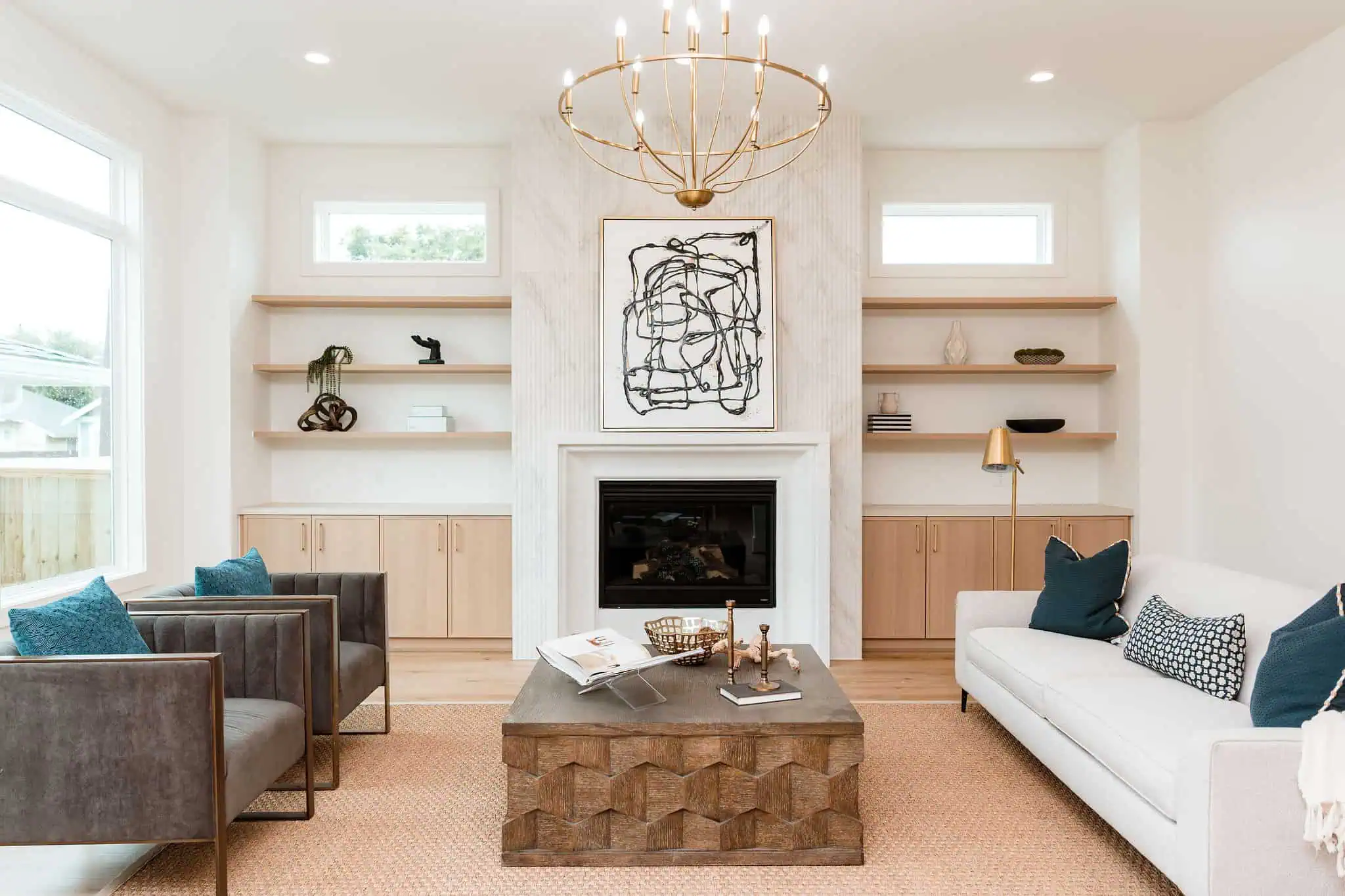
Cabinetry and built-ins: The architect may show locations on plans. The interior designer typically develops the look, proportions, and finish. On some projects the designer provides detailed direction the builder works from. On others the architect documents it. It depends on the team.
Ceiling details: Coffered ceilings, beams, and vaulted ceilings involve both structural feasibility (architect) and design decisions about proportions, material, and lighting integration (designer).
Window placement: Windows are structural decisions, but where they go affects furniture layouts, sight lines, and natural light on the inside. Early collaboration between both roles prevents trade-offs later.
Lighting: The electrical consultant and architect plan the wiring. The interior designer typically selects the fixtures and shapes the overall lighting scheme. Getting the two aligned before electrical rough-in is one of the most important coordination points on a custom home.
Construction documentation: This is one of the most variable areas. On some projects, the architect handles all construction documentation and the designer provides selections and visual references. On other projects, the designer contributes drawings and specifications that feed directly into the construction set. It depends on the scope, the team, and how the engagement is structured.
The overlap is not a problem. It is actually where the best design work happens, when both professionals are contributing their perspective to the same decisions.
Do You Need Both?
For a full custom home build, most families benefit from having both an architect and an interior designer. The architect brings the technical and structural expertise. The interior designer brings the vision for how the home will actually be lived in. Neither role fully replaces the other.
For a renovation, it depends on the project. Some interior designers handle structural changes and construction documentation as part of their scope. Others work alongside an architect who covers the structural and technical side. It depends on the designer’s experience and the complexity of the project. For a furnishing-only project on a completed home, you typically only need an interior designer.
The answer also depends on how involved you want each professional to be. Some homeowners want a designer who is deeply embedded in the architectural process from day one. Others prefer to work with their architect on the floor plan and bring the designer in later for finishes and furnishing. Both approaches work. The key is knowing what you want and communicating that to your team.
How the Two Roles Typically Work Together
On most Houston custom home projects, the collaboration follows a general arc.
Early in the planning process, the interior designer and architect work together on spatial decisions. Room sizes, ceiling heights, kitchen and bathroom footprints, and built-in opportunities are all shaped during this phase.
As the plans develop, the designer begins making material and finish selections while the architect refines the technical documentation. The two stay in communication so the designer’s selections are reflected in the construction set.
During construction, both professionals may visit the site at key milestones. The designer typically reviews finish installations, cabinetry, tile, and lighting. The architect typically reviews structural and technical items.
At the end of the project, the designer manages furniture placement, art, window treatments, and final styling. The architect’s involvement is usually complete by this stage.
The earlier the designer is brought into the project, the more influence the design vision has on the finished home. For a more detailed look at timing, read our guide on when to hire an interior designer for a custom home build in Houston.
Common Questions
Do I need both an architect and an interior designer for a custom home?
For most custom home builds, yes. The two roles complement each other. That said, every project is different, and the right team structure depends on the scope of the home and how involved you want each professional to be.
Which one should I hire first?
Ideally both at the same time, during schematic design. If you need to hire one first, start with the architect, but bring the designer in early enough to influence the floor plan and spatial decisions.
What if my architect offers interior design services?
Some architecture firms include finish selection services. That can work well for some projects. It is generally a narrower scope than what a dedicated interior designer provides, especially when it comes to furniture, custom millwork concepts, lighting design, and the finished look of the home.
Can an interior designer work without an architect?
It depends on the project. Some interior designers handle structural changes and construction documentation as part of their scope, especially on renovations. For a ground-up custom build, most projects benefit from having an architect involved for the overall structural design. The two roles can overlap significantly, and how the scope is divided depends on the team.
Is there always a clear line between what the architect does and what the designer does?
No. The line shifts depending on the project, the team, and how the engagement is structured. Some designers take on a broader scope that includes elements typically associated with the architect. Some architects handle finish selections that are typically designer-led. What matters is that the team communicates well and the homeowner knows who is handling what on their specific project.
Ready to Talk About Your Houston Custom Home?
L. Meraki Interiors leads custom home interior design engagements across Houston. Megan Lindner works directly with families and their architects on custom homes in River Oaks, Memorial, Cypress, Katy, Fulshear, and Houston Heights.
If you are building a custom home and want to understand how a designer fits into your project team, we can help.