Your home is likely the largest investment you will ever make. And like any investment, its value depends not just on location and square footage, but on the quality of what is inside. Professional interior design is one of the most effective ways to protect, enhance, and grow the value of a residential property, yet it is also one of the most overlooked.
In Houston’s current real estate market, where homes are spending more time on the market and buyers have more options than they did two years ago, the condition and presentation of a home matters more than ever. A professionally designed home stands out. It photographs better, shows better, and sells faster. But the value of good design goes well beyond resale. It shapes how you live in the space every day.
Megan Lindner, founder and lead designer of L. Meraki Interiors, sees this firsthand with every project. “Design is not decoration. It is the difference between a house that functions beautifully for your life and one that just looks nice in photos. When both of those things come together, the value follows.”
The Connection Between Design and Home Value
Home value is driven by two forces: the tangible and the intangible. The tangible side includes square footage, material quality, and condition. The intangible side includes how a home feels when you walk through it, how the spaces flow, how light enters the rooms, and how thoughtfully the finishes and furnishings work together.
Professional interior designers work on both sides of that equation. They select materials that are durable and timeless. They plan layouts that maximize usable space. They specify finishes and fixtures that signal quality to buyers and appraisers. And they create an overall experience that makes a home feel intentional, cohesive, and worth the asking price.
In a competitive market like Houston, where buyers are comparing homes across River Oaks, Memorial, Tanglewood, West University, Cypress, Katy, and The Woodlands, these details are what separate a home that sells quickly from one that sits.
Where Interior Design Adds the Most Value
Not every design decision carries equal weight when it comes to home value. Some areas of the home deliver a significantly higher return than others. Understanding where to invest your design budget is one of the most important things a professional designer brings to the table.
Kitchen Design
The kitchen is consistently the most scrutinized room in any home sale. Buyers form strong opinions within seconds, and outdated kitchens are one of the most common reasons a deal stalls or a price drops.
A professionally designed kitchen goes beyond new countertops and cabinet hardware. It addresses layout and workflow, storage efficiency, material quality, lighting layers, and the relationship between the kitchen and adjacent living spaces. In Houston’s luxury market, plan open-concept kitchens with high-end appliances, custom cabinetry, and natural stone surfaces are expected, not optional.
A well-executed kitchen renovation can return more than the cost of the project. According to the 2025 Cost vs. Value Report, minor kitchen remodels remain one of the few projects that consistently return over 100% of the investment at resale.
Bathroom Design
Bathrooms carry outsized influence on perceived home value. A dated bathroom makes buyers assume the rest of the home has been neglected. A clean, well-designed bathroom signals care and quality throughout.
Professional designers approach bathrooms with the same rigor as any other room. Tile selection, vanity design, fixture finishes, lighting, and spatial layout all work together. In Houston’s luxury homes, primary bathrooms are treated as private retreats, with freestanding tubs, walk-in showers with frameless glass, and custom storage solutions that eliminate visual clutter.
Living Spaces and Flow
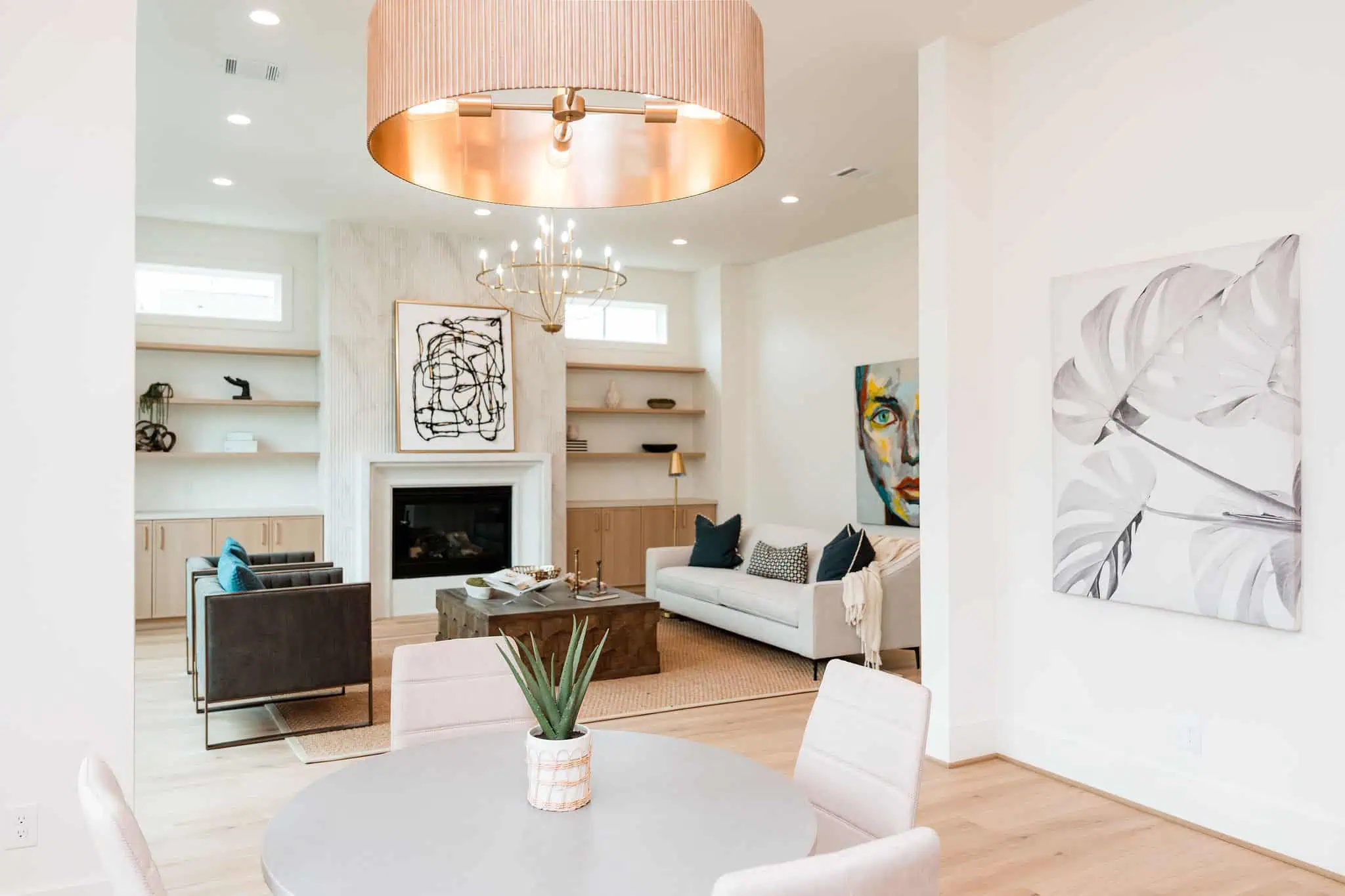
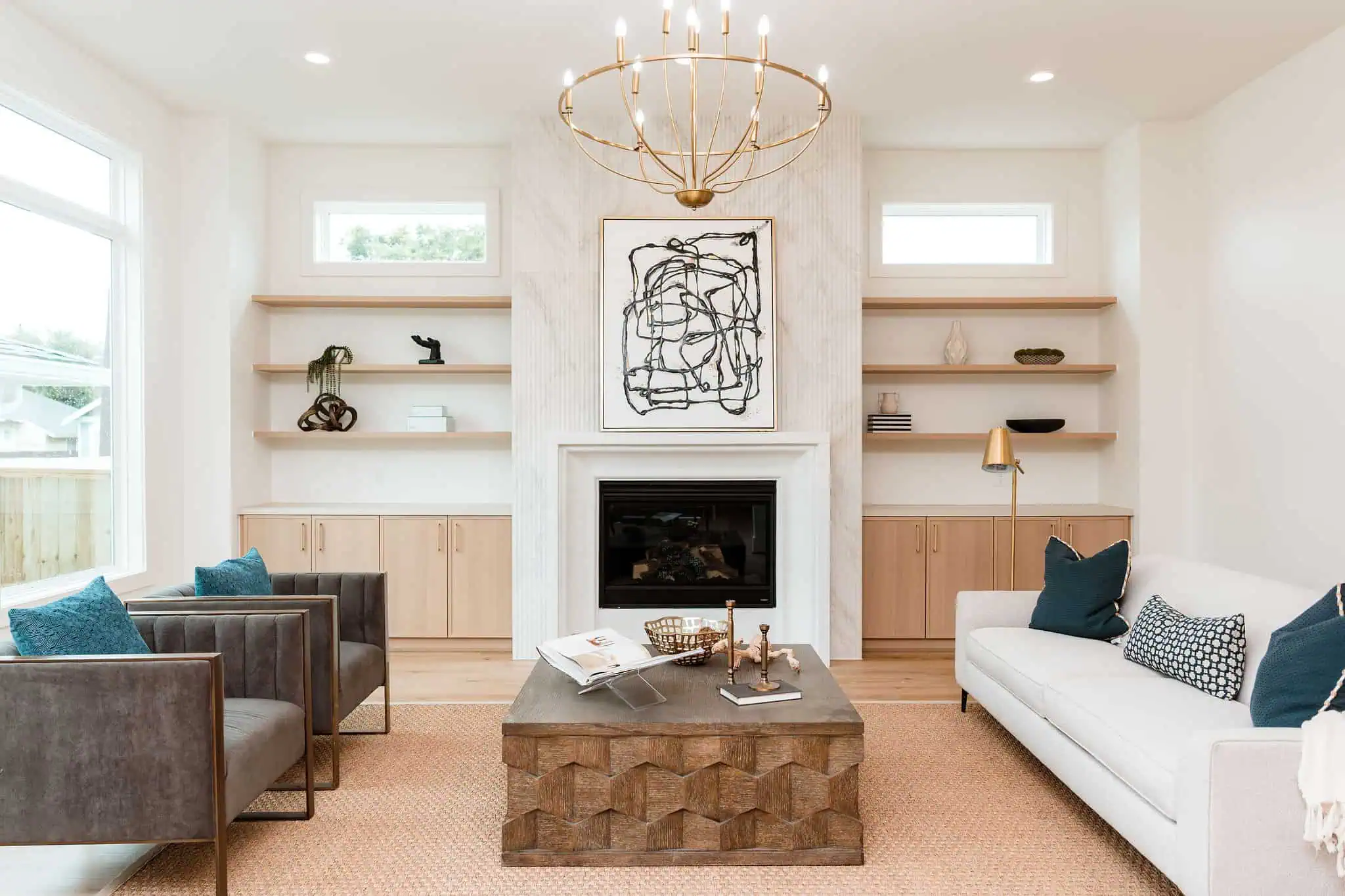
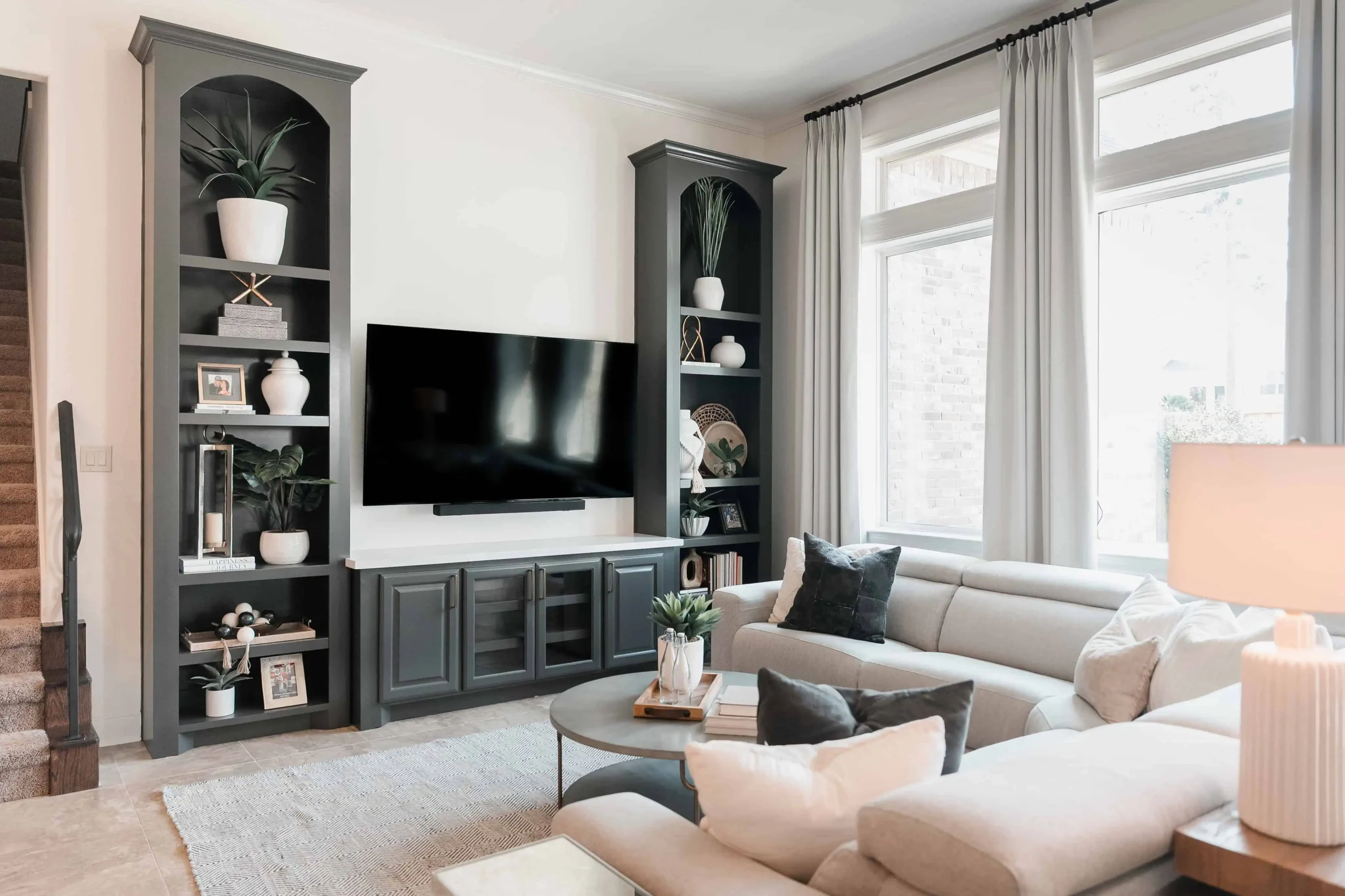
Open floor plans remain the standard in Houston’s residential market, but openness alone does not create a great living space. The way furniture is arranged, the proportions of each seating area, the lighting plan, and the material palette all determine whether a room feels inviting or awkward.
A professional designer understands spatial relationships. They know how to anchor a large living room without making it feel heavy. They know how to create distinct zones within an open layout, where the kitchen transitions to the dining area transitions to the family room, without walls or barriers. This kind of thoughtful planning makes a home feel larger, more functional, and more sophisticated.
Primary Suite
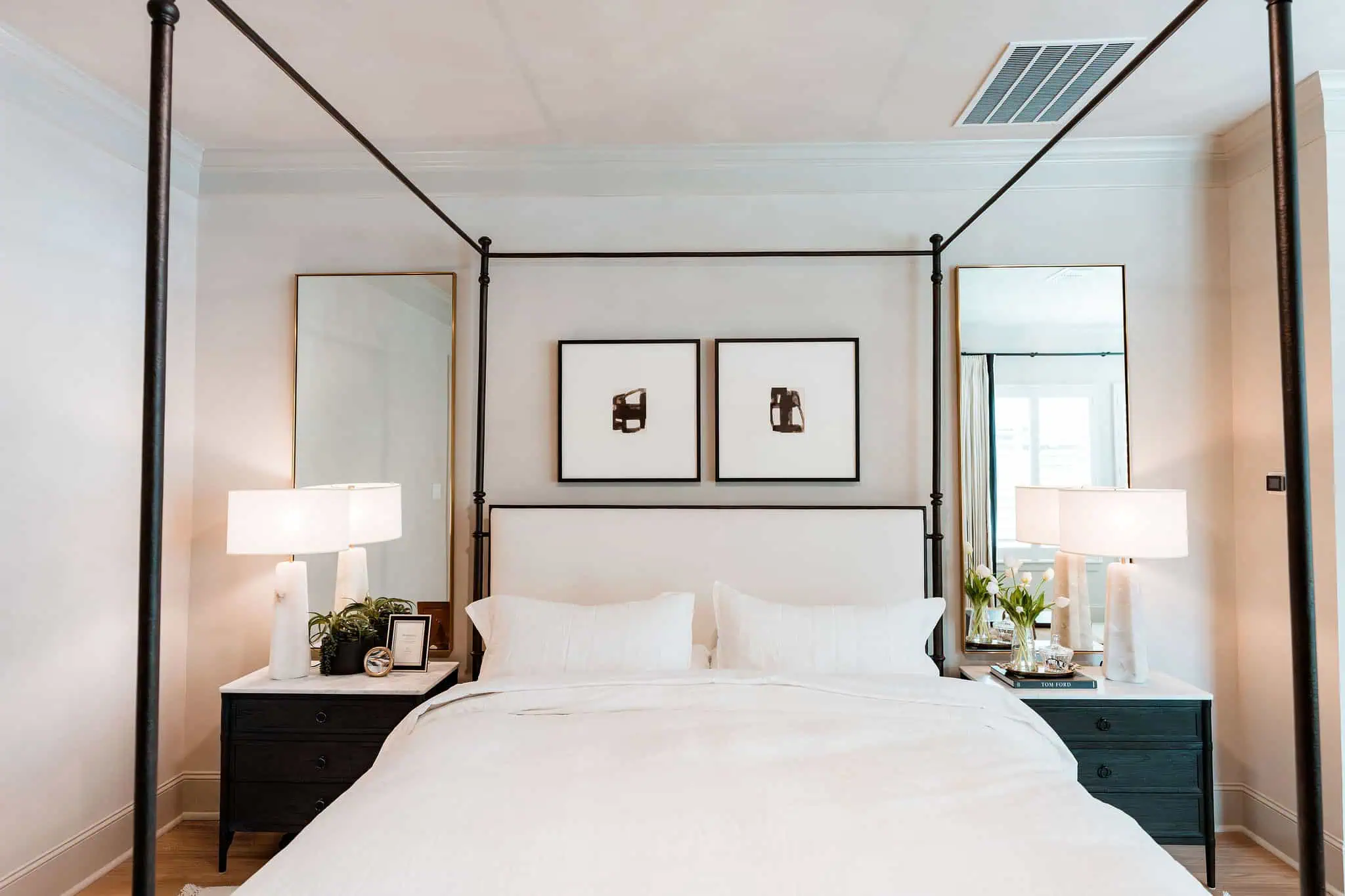
The primary bedroom and bathroom have become one of the most value-sensitive areas in residential design. Buyers in Houston’s luxury market expect a primary suite that feels like a private retreat, not just a large bedroom with an attached bath.
Megan Lindner and the L. Meraki Interiors team approach primary suites with particular care. Lighting, closet design, window treatments, material selection, and furniture scale all contribute to a sense of calm and luxury. When done well, a primary suite becomes one of the most compelling selling points in the home.
Lighting Design
Lighting is one of the most undervalued elements in residential design, and one of the most impactful when it comes to home value. A home with a well-designed lighting plan feels dramatically different from one that relies on basic overhead fixtures.
Professional designers layer lighting across three categories: ambient, task, and accent. This creates depth, warmth, and flexibility in every room. Recessed lighting, sconces, pendants, under-cabinet lighting, and dimmable controls all work together to make a home feel finished and considered.
Buyers notice lighting immediately, even if they cannot articulate why. A home that feels warm and inviting at every hour of the day is a home that feels valuable.
Design Decisions That Protect Long-Term Value
Some design choices add value today. Others protect value over time. A professional designer thinks about both.
Timeless Over Trendy
Trends move fast. A backsplash tile that felt fresh three years ago can look dated today. A professional designer knows how to incorporate current sensibilities without anchoring the home to a specific moment. This is especially important for homeowners who plan to stay in their home for five, ten, or fifteen years before selling.
At L. Meraki Interiors, this philosophy drives every material and finish decision. The goal is to create spaces that feel current and refined today and still feel that way a decade from now. Neutral foundations with character-driven details age far better than bold trends that peak and fade.
Material Quality and Durability
The quality of materials directly impacts long-term home value. Solid hardwood floors, natural stone countertops, custom millwork, and high-grade hardware do not just look better. They perform better over time. They resist wear. They maintain their appearance. And they signal to future buyers that the home was built and maintained with care.
Professional designers have access to trade-only resources, custom fabricators, and material suppliers that are not available through retail channels. This means better quality at better pricing, and a finished product that holds up to daily life in a Houston home.
Functional Layout and Space Planning
A beautiful home that does not function well will eventually frustrate its owners and disappoint future buyers. Space planning is the invisible backbone of good design, and it is where professional designers deliver the most lasting value.
This includes how rooms relate to each other, how traffic flows through the home, how storage is integrated, and how each space supports the way the homeowners actually live. A well-planned home feels effortless. A poorly planned one feels like a series of compromises, no matter how expensive the finishes are.
The Houston Market Context
Houston’s real estate market in 2026 is stabilizing. Home prices have moderated slightly, inventory is rising, and homes are spending more time on the market than they did during the peak years of 2021 through 2023. For sellers, this means the bar is higher. Buyers have options, and they are more discerning.
In this environment, professionally designed homes have a clear advantage. They photograph better for online listings, which is where the vast majority of home searches begin. They show better during walkthroughs. And they justify stronger asking prices because the quality is visible in every detail.
For homeowners in Houston’s luxury neighborhoods, from River Oaks and Memorial to Tanglewood, West University, and Bellaire, professional design is not an upgrade. It is the baseline. Buyers at this level expect cohesive, high-quality interiors. Homes that do not deliver that expectation sit longer and sell for less.
The same dynamic is increasingly true in Houston’s growing suburban markets. Homeowners in Cypress, Katy, Fulshear, Sugar Land, and The Woodlands are investing in professional design for new construction, major renovations, and pre-sale preparation. The return on that investment is real and measurable.
Beyond Resale: The Daily Return on Design
The financial return on professional interior design is important. But for most homeowners, the daily return matters even more.
A well-designed home reduces stress. It eliminates the friction of rooms that do not work, storage that is not adequate, and spaces that feel disjointed. It creates an environment where you actually enjoy spending time, where entertaining feels easy, and where every room supports your routine instead of working against it.
This is the return that Megan Lindner and the team at L. Meraki Interiors focus on first. When a home works beautifully for the people who live in it, the financial value takes care of itself.
Frequently Asked Questions
Does hiring an interior designer actually increase home value?
Yes. A professionally designed home typically commands a higher sale price and spends less time on the market compared to similar homes without professional design. The impact comes from better material selections, more functional layouts, cohesive aesthetics, and attention to details that buyers and appraisers notice. The exact return depends on the scope of the project and the quality of execution.
What interior design upgrades add the most value to a Houston home?
Kitchen and bathroom renovations consistently deliver the highest return. Beyond those, lighting design, flooring upgrades, and cohesive color and material palettes throughout the home have a strong impact. In Houston’s luxury market, primary suite design, custom storage solutions, and outdoor living spaces are also high-value investments.
Is it worth hiring an interior designer before selling my Houston home?
Absolutely. A designer can identify the highest-impact improvements for your specific home and market. This is different from staging, which focuses on presentation for sale. Design-level upgrades, like updated lighting, refined finishes, and improved spatial flow, add real value that appraisers and buyers recognize. The investment often pays for itself through a higher sale price and a faster closing.
How much does professional interior design cost in Houston?
Costs vary based on the scope of the project. A single room redesign typically runs $8,000 to $25,000 including furnishings. Multi-room projects range from $50,000 to $150,000. Full-home luxury design projects in Houston can exceed $500,000 depending on size and the level of customization. For a detailed breakdown, read our guide on how much an interior designer costs in Houston.
What is the difference between staging and interior design for home value?
Staging is a temporary presentation strategy used to make a home look appealing for sale. It uses rented furniture and accessories and does not involve any permanent changes. Interior design involves permanent, structural, and material-level improvements that add lasting value to the property. Both have their place, but design delivers a deeper, more durable return.
Should I invest in interior design if I am not planning to sell soon?
Yes. The best time to invest in professional design is when you are living in the home and will benefit from the improvements daily. Homeowners who design for their own lifestyle, rather than for a future buyer, typically end up with homes that are both more enjoyable to live in and more valuable when the time to sell eventually comes.
Invest in Your Home the Right Way
Professional interior design is not a luxury expense. It is a strategic investment in how you live and in the long-term value of your most significant asset. The right designer will help you make decisions that look beautiful today, perform well over time, and add measurable value to your Houston home.
At L. Meraki Interiors, Megan Lindner and her team work with homeowners across Houston to create spaces that are as functional as they are refined. From River Oaks and Memorial to Cypress, Katy, and the surrounding communities, every project is approached with the same attention to quality, detail, and lasting value.
Schedule a consultation with L. Meraki Interiors to talk about your home.